Shipping Into Amazon FBA Japan from China
Japan rewards sellers who sweat the details. The transit is the shortest of any major FBA market, but the labeling, category compliance and pallet standards are their own world — a product that clears a US FC without comment can still stall at a Japanese one.
To inbound into an Amazon Japan fulfillment center from China: every unit carries a scannable FNSKU (or approved manufacturer barcode), every carton its shipment box ID, cartons respect the published weight and dimension ceilings, and palletized freight is built on T11 1,100 x 1,100 mm pallets within the height cap. Before production, confirm whether your category needs Japanese-language labeling or marks such as PSE. Amazon Japan's Seller Central defines the current requirements — always verify there.
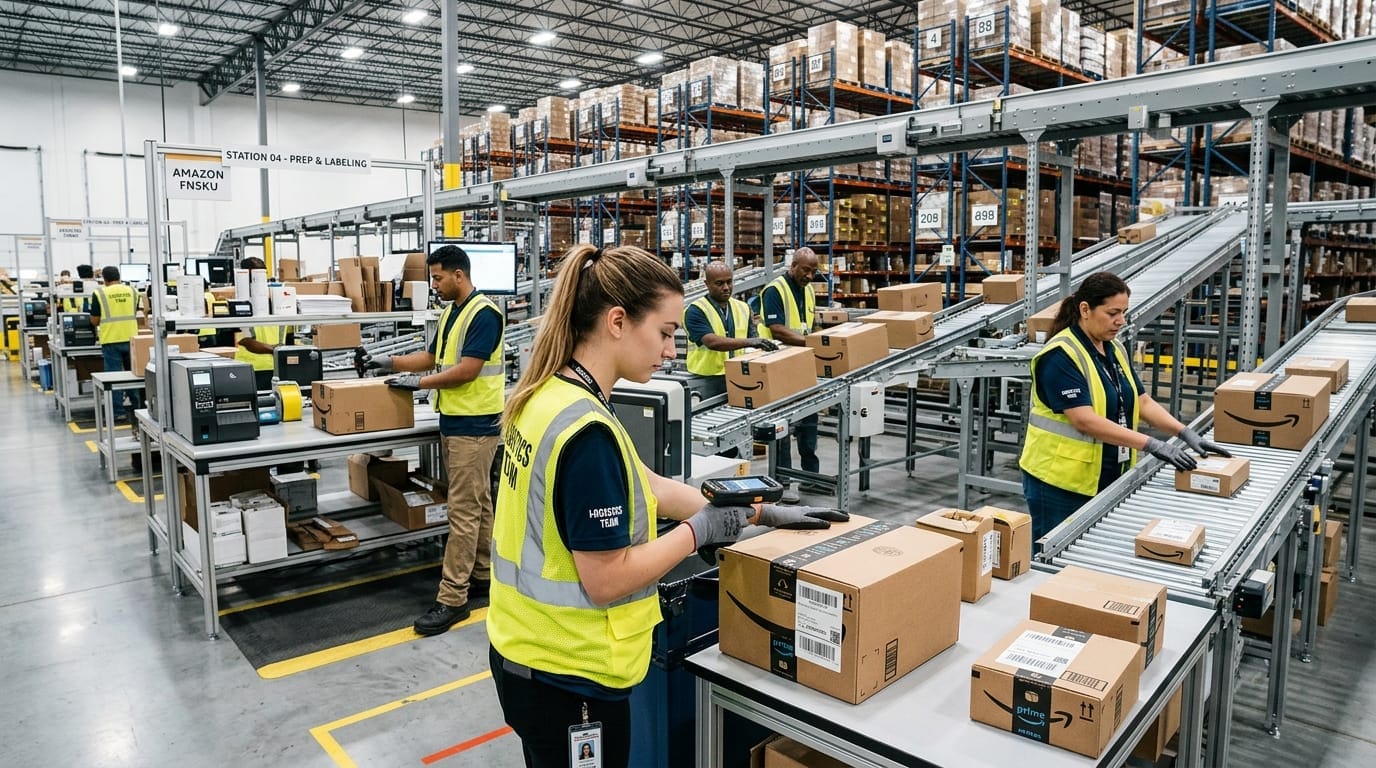
The Shortest Lane: Transit from China to Japan
Indicative planning figures — every sailing is quoted and confirmed per shipment.
| Channel | Indicative Door-to-FC | What It Means for Planning |
|---|---|---|
| Ocean direct services | Roughly 7–14 days | Ocean behaves almost like a "slow air" lane — monthly restock cycles are practical on water alone. |
| Air freight / express | Roughly 2–5 days | Reserved for genuine emergencies; on this lane, air is a smaller premium than sellers expect. |
Short transit cuts both ways: less schedule buffer means a missed sailing hurts sooner. The backward-planning timeline method still applies — just compressed to Japan's calendar.
Japan-Specific Compliance Layers
- Japanese-language labeling. Consumer protection law requires Japanese labels on defined product categories — ingredients, usage, warnings and manufacturer responsibility all have prescribed presentation. Scope is category-specific; check the legal requirements and Amazon's policy pages for your ASIN.
- PSE and technical marks. Electrical appliances and certain other regulated goods require Japan-specific conformity marks and documentation from the factory.
- Category gatekeeping. Japan's marketplace has additional approval requirements for sensitive categories (foods, cosmetics, medical-adjacent goods). Approvals are granted in Seller Central — do not ship stock that lacks an approved listing.
- Importer identification. The customs entry needs a competent importer of record on the Japanese side; sellers without a Japanese entity commonly rely on their forwarder's import arrangement or a registered local representative. Confirm the setup with your tax adviser before shipping.
Carton, Label and Pallet Standards
- FNSKU per unit, scannable, old barcodes fully covered when relabeling.
- Carton ID label on each box, flat surface, no seams, no tape overlap.
- Published carton weight and dimension ceilings apply, with heavy-box handling labels above thresholds.
- T11 pallets (1,100 x 1,100 mm) for palletized deliveries, stacked within the height cap including the pallet; verify current values in Seller Central.
- Suffocation warnings on qualifying polybags — the same category logic as other marketplaces.
Prep categories in full detail: the FBA prep checklist.
Where Japan Inbound Fails Most
Japan Inbound FAQ
Why is Japan the fastest FBA market to replenish from China?
Geography. Ocean services from Shanghai, Ningbo and Shenzhen to Japanese ports cover the distance in days rather than weeks, so planned ocean replenishment can run on cadences closer to what air freight buys in Europe or North America. Short transit also means a restock plan can react to demand shifts within the same selling month.
What is a T11 pallet?
T11 is the Japanese-standard square pallet of 1,100 x 1,100 mm — different from both US 48 x 40 inch and EUR 1200 x 800 mm formats. Palletized deliveries into Japanese FCs are commonly built on T11 dimensions with stacked-height limits including the pallet; confirm the current spec in Seller Central Japan before loading.
Does my product need Japanese-language labels?
For a range of consumer categories, Japanese regulations require product labeling in Japanese — scope depends on the category (foods, electrical appliances, household goods have the most explicit requirements). Separately, electrical products often require the PSE diamond mark. Category requirements are defined by Japanese law and Amazon's policy pages; verify per ASIN rather than assuming.
How is consumption tax handled for FBA imports?
Imported commercial goods are assessed for customs duty and consumption tax at entry based on their declared value. How you account for consumption tax as a seller (and whether registrations are needed) is a tax-adviser question that should be settled before your first shipment — the freight side only works when the import declaration has a competent importer behind it.
Shipping to Other Amazon Marketplaces?
Get a Japan FBA Shipping QuoteLast reviewed: September 2026 · Japanese labeling law, category approvals and Amazon Japan inbound rules change; verify current requirements in Seller Central Japan and with qualified advisers.